722. ANTU

Nomenclature

CAS number: 86-88-4
N-1-Naphthalenylthiourea; 1-(1-naphthyl)-2-thiourea; α-naphthylthiourea; N-1-naphthylthiourea; α-naphthylthiocarbamide; krysid; chemical 109; Anturat; Bantu; Rattrack.
C11H10N2S; mol wt 202.28.
C 65.31%, H 4.98%, N 13.85%, S 15.85%.

Description and references

Prepd from α-naphthylamine and ammonium or potassium or sodium thiocyanate: de Clermont, Wehrlin, Bull. Soc. Chim. [2] 26, 125 (1876); Alvarez, C.A. 42, 4560 (1948); from α-naphthylisothiocyanate by treatment with alcoholic ammonia: Dyson, Hunter, Chem. News 134, 4 (1927). Rodenticide activity: Richter, J. Am. Med. Assoc. 129, 927 (1945). Review of carcinogenic risk: IARC Monographs 30, 347-357 (1983).
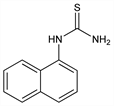
Chemical structure

Properties

Prisms from alc. Bitter taste. mp 198°. Solubility in water at 25°: 0.06 g/100 ml; in acetone: 2.43 g/100 ml; in triethylene glycol: 8.6 g/100 ml. Fairly sol in hot alc.

Caution

Potential symptoms of toxicity following ingestion of large doses are vomiting, dyspnea, cyanosis and coarse pulmonary rales; liver damage. See NIOSH Pocket Guide to Chemical Hazards (DHHS/NIOSH 97-140, 1997) p 20. May cause glomerular injury in nonlethal poisonings. See Clinical Toxicology of Commercial Products, R. E. Gosselin et al., Eds. (Williams & Wilkins, Baltimore, 5th ed., 1984) Section III, p 40-42.

Use

Rodenticide. Specific control for the adult Norway rat; less toxic to other rat species.