1445. Bromthymol Blue
Nomenclature
CAS number: 76-59-5
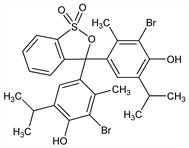
4,4′-(1,1-Dioxido-3H-2,1-benzoxathiol-3-ylidene)bis[2-bromo-3-methyl-6-(1-methylethyl)phenol]; 4,4′-(3H-2,1-benzoxathiol-3-ylidene)bis[2-bromo-3-methyl-6-(1-methylethyl)phenol] S,S-dioxide; α,α-bis(6-bromo-5-hydroxycarvacryl)-α-hydroxy-o-toluenesulfonic
acid γ-sultone; 3,3′-dibromothymolsulfonphthalein; bromothymol blue. C27H28Br2O5S; mol wt 624.38.
C 51.94%, H 4.52%, Br 25.59%, O 12.81%, S 5.14%.
Description and references
Prepd by the action of bromine on thymol blue in glacial acetic acid: Clark, Lubs, J. Wash. Acad. Sci. 5, 609 (1915); 6, 482 (1916); Chem. Zentralbl. 1916, I, 175; II, 1068. See also ref under Bromcresol Green.
Properties
Cream-colored crystals. Sparingly sol in water; sol in alcohol and in aq solns of alkalies. Also sol in ether. Less sol in benzene, toluene, xylene. Practically insol in petr ether. pKa = 7.0. pH 6.0 yellow; pH 7.6 blue. To prepare a soln for use as pH indicator, dissolve 0.10 g in 8.0 ml N/50 NaOH and dil with water to 250 ml. To prepare a soln for use as indicator in volumetric work, dissolve 0.1 g in 100 ml of 50% alc.Derivative
Sodium salt.Nomenclature
CAS number: 34722-90-2
C27H27Br2NaO5S; mol wt 646.36.
C 50.17%, H 4.21%, Br 24.72%, Na 3.56%, O 12.38%, S 4.96%.