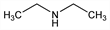
3111. Diethylamine
Nomenclature
CAS number: 109-89-7
N-Ethylethanamine. C4H11N; mol wt 73.14.
C 65.69%, H 15.16%, N 19.15%.
Description and references
Prepn from ethyl iodide and NH3 with separation of mono-, di-, and triethylamines formed: Watt, Otto, J. Am. Chem. Soc. 69, 836 (1947). Manuf from ethanol and NH3, obtained along with mono- and triethylamines: Davies et al., US 2609394 (1952 to ICI); Lemon, Myerly, US 3022349 (1962 to Union Carbide). Toxicity data: Smyth et al., Arch. Ind. Hyg. Occup. Med. 4, 119 (1951).
Properties
Strongly alkaline liquid, bp 55.5°. mp -50°. d420 0.7074. nD20 1.3864. Flash pt <20°F. Forms a hydrate, B2.H2O, mp -19°. Miscible with water, alc. It is usually supplied as a soln. Flammable, corrosive. Keep well closed. LD50 orally in rats: 540 mg/kg (Smyth).Derivative
Hydrochloride.Nomenclature
CAS number: 660-68-4
C4H11N.HCl; mol wt 109.60.
C 43.83%, H 11.04%, N 12.78%, Cl 32.35%.