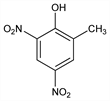
3279. Dinitrocresol
Nomenclature
CAS number: 534-52-1
2-Methyl-4,6-dinitrophenol; 4,6-dinitro-o-cresol; 3,5-dinitro-2-hydroxytoluene; 3,5-dinitro-o-cresol; DN; DNC; DNOC; Antinonnin; Detal; Dinitrol; Elgetol; K III; K IV; Ditrosol; Prokarbol; Effusan; Lipan; Selinon; Sinox; Dekrysil. C7H6N2O5; mol wt 198.13.
C 42.43%, H 3.05%, N 14.14%, O 40.38%.
Description and references
Prepd by sulfonation of o-cresol followed by controlled nitration: Noelting, de Salis, Ber. 14, 987 (1881); Bovini, Chem. Zentralbl. 1928, II, 112; Bures, C.A. 22, 63 (1928); Datta, Varma, J. Indian Chem. Soc. 4, 321 (1927); Monti, Cianetti, Gazz. Chim. Ital. 67, 628 (1937). Acute toxicity data: R. Ben-Dyke et al., World Rev. Pest Control 9, 119-127 (1970). Review of toxicology and human exposure: Toxicological Profile for Dinitrocresols (PB95-264321, 1995) 204 pp.
Properties
Yellow prisms from alc, mp 87.5°. Poisonous. Moderately volatile with steam. Sparingly sol in water; readily sol in alkaline aq solns, in ether, acetone, alcohol (about 10%); sparingly sol in petr ether. LD50 in rats (mg/kg): 25-40 orally, 200-600 dermally (Ben-Dyke).Derivative
Sodium salt.C7H5N2O5Na; mol wt 220.11.
C 38.20%, H 2.29%, N 12.73%, O 36.34%, Na 10.44%.