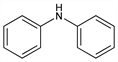
3317. Diphenylamine
Nomenclature
CAS number: 122-39-4
N-Phenylbenzeneamine. C12H11N; mol wt 169.22.
C 85.17%, H 6.55%, N 8.28%.
Description and references
Prepd by heating aniline with aniline hydrochloride.
Properties
Crystals; floral odor. d 1.16. mp 53-54°. bp 302°. Flash pt 153°C. Discolors in light. One gram dissolves in 2.2 ml alcohol, 4.5 ml propyl alcohol; freely sol in benzene, ether, glacial acetic acid, carbon disulfide. Insol in water. Forms salts with strong acids. Keep protected from light.Derivative
Hydrochloride.Nomenclature
CAS number: 537-67-7
C12H11N.HCl; mol wt 205.68.
C 70.07%, H 5.88%, N 6.81%, Cl 17.24%.
Properties
Crystals, turn blue in air. Freely sol in water, alcohol.Derivative
Sulfate.Nomenclature
CAS number: 587-84-8
C12H11N.H2SO4; mol wt 267.30.
C 53.92%, H 4.90%, N 5.24%, S 12.00%, O 23.94%.