4680. Hexachlorophene
Nomenclature
CAS number: 70-30-4
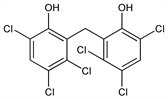
2,2′-Methylenebis[3,4,6-trichlorophenol]; 2,2′-dihydroxy-3,3′,5,5′,6,6′-hexachlorodiphenylmethane; bis(3,5,6-trichloro-2-hydroxyphenyl)methane; AT-7; G-11; Bilevon; Dermadex (Alconox); Exofene; Hexosan; pHisohex (Winthrop); Surgi-Cen; Surofene. C13H6Cl6O2; mol wt 406.90.
C 38.37%, H 1.49%, Cl 52.28%, O 7.86%.
Description and references
Prepd by the condensation of 2 mols of 2,4,5-trichlorophenol with 1 mol formaldehyde in the presence of concd sulfuric acid: Gump, US 2250480 (1941 to Burton T. Bush). Improved procedures: US 2435593 (1948) and US 2812365 (1957 to Givaudan). Acute toxicity: T. B. Gaines, R. E. Linder, Fundam. Appl. Toxicol. 7, 299 (1986).
Properties
Crystals from benzene, mp 164-165°. Poisonous. Practically insol in water. Sol in alcohol, acetone, ether, chloroform, propylene glycol; polyethylene glycols; olive oil; cottonseed oil; dil aq solns of the alkalies. Forms salts with alkalies and alkaline earths. Phenol coefficient ≈125 (monopotassium salt). Incompatible with Tweens from bacteriological point of view. LD50 in adult male, female rats (mg/kg): 66, 57 orally (Gaines, Linder).Derivative
Monophosphate.Nomenclature
Hepadist.Caution
Excessive dosage to animals results in symptoms of neurotoxicity. Reversible vacuolar changes mainly affecting the myelin of the brain and spinal cord have been reported. Because of potential neurotoxicity in humans, the FDA has regulated use. See Lockhart, Pediatrics 50, 229 (1972).Use
Chiefly in the manuf of germicidal soaps.Therapeutic Category
Antiseptic; disinfectant.
Therapeutic Category (Veterinary)
Anthelmintic (flukicide).Keywords
Antiseptic/Disinfectant; Phenols