Nomenclature
CAS number: 300-76-5
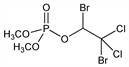
Phosphoric acid 1,2-dibromo-2,2-dichloroethyl dimethyl ester; 1,2-dibromo-2,2-dichloroethyl dimethyl phosphate; bromchlophos; ENT-24988; OMS-75; RE-4355; Bromex; Dibrom (Amvac); Lucanal (Lucava).
C
4H
7Br
2Cl
2O
4P; mol wt 380.78.
C 12.62%, H 1.85%, Br 41.97%, Cl 18.62%, O 16.81%, P 8.13%.
Description and references
Organophosphate insecticide; cholinesterase
inhibitor. Prepn: GB 855157; Ospenson, Kohn, US 2971882 (1960, 1961 both to California
Res. Corp.). Toxicity study: T. B. Gaines, Toxicol. Appl.
Pharmacol. 14, 515 (1969) DOI PubMed. GC determn of environmental residue: H. Zhong, M. Latham, J. Am.
Mosq. Control Assoc. 17, 225 (2001) PubMed.
Properties
Usually obtained as a liquid, slightly pungent
odor, bp0.5 110°. Poisonous. Corrosive. d425 1.96. Has been crystallized, mp 26.5-27.5°. Vapor pressure at 20° about 2 × 10⁻³ mm Hg. Practically insol in water. Completely hydrolyzed by water
within 48 hrs. Freely sol in aromatic and chlorinated hydrocarbons,
ketones, alcohols. Sparingly sol in petroleum solvents and mineral
oils. LD50 in male rats (mg/kg): 250 orally; 800 dermally (Gaines).Caution
Potential symptoms of overexposure
are miosis, lacrimation; headache; chest tightness, wheezing and laryngeal
spasm; salivation; cyanosis; anorexia, nausea, vomiting, abdominal
cramps and diarrhea; weakness, twitching and paralysis; giddiness,
ataxia and convulsions; low blood pressure; cardiac irregularities;
irritation of skin and eyes. See NIOSH Pocket Guide to Chemical Hazards (DHHS/NIOSH 97-140,
1997) p 114.Use
Insecticide; acaricide.