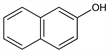
6384. 2-Naphthol
Nomenclature
CAS number: 135-19-3
2-Naphthalenol; β-naphthol; beta-naphthol; β-hydroxynaphthalene; isonaphthol; C.I. Azoic Coupling Component 1; C.I. Developer 5; C.I. 37500. C10H8O; mol wt 144.17.
C 83.31%, H 5.59%, O 11.10%.
Description and references
Prepn from sodium naphthalene-2-sulfonate: Schoeffel, Barton, US 2760992 (1956 to Sterling); Stevens, Harris, US 2831895 (1958 to Dow); FR 1326175 (1963 to Ciba); by oxidation of naphthalene: Simons, US 2530369 (1950 to Phillips Petroleum); from 2-bromonaphthalene + tert-butyl hydroperoxide: Lawesson, Yang, J. Am. Chem. Soc. 81, 4230 (1959).
Properties
Crystals, mp 121-123°. bp 285-286°. d 1.22. Flash pt 161°C. Slight phenolic odor. Darkens with age on exposure to light. Sublimes when heated, distillable in vacuo; volatile with vapors of alcohol or water; reduces ammoniacal silver nitrate. uv max (95% ethanol): 226, 265, 275, 286, 320, 331 nm (ε 91,194, 3911, 4559, 3301, 1861, 2163). One gram dissolves in 1000 ml water, 80 ml boiling water, 0.8 ml alcohol, 17 ml chloroform, 1.3 ml ether; sol in glycerol, olive oil, solns of alkali hydroxides. Protect from light. Incompat.: Antipyrine, camphor, phenol, ferric salts, menthol, potassium permanganate and other oxidizing agents, urethane.Derivative
Sodium salt.Nomenclature
CAS number: 875-83-2
Sodium β-naphtholate; sodium naphthol; Microcidin. C10H7NaO; mol wt 166.15.
C 72.29%, H 4.25%, Na 13.84%, O 9.63%.
Properties
Grayish-white powder; becomes reddish or brownish on exposure to light and air. Soluble in 3 parts water. Keep well closed and protected from light.Caution
Potential symptoms of overexposure to 2-naphthol include crampy abdominal pain, nausea, vomiting and sometimes convulsions. Intestinal or percutaneous absorption may lead to severe nephritis, liver injury and acute hemolytic anemia. Lens opacities and retinal changes may occur. See Clinical Toxicology of Commercial Products, R. E. Gosselin et al., Eds. (Williams & Wilkins, Baltimore, 5th ed., 1984) Section II, p 188.Use
Manuf medicinal organics, dyes, perfumes; the largest single use is probably in making antioxidants for the synthetic rubber industry.Therapeutic Category
Formerly as anthelmintic (Nematodes).
Therapeutic Category (Veterinary)
Has been used as antiseptic, anthelmintic and counter-irritant in alopecia.Keywords
Anthelmintic (Nematodes)