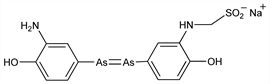
6447. Neoarsphenamine
Nomenclature
CAS number: 457-60-3
Sulfoxylic acid mono[[[5-[(3-amino-4-hydroxyphenyl)diarsenyl]-2-hydroxyphenyl]amino]methyl]
ester monosodium salt; [5-[(3-amino-4-hydroxyphenyl)arseno]-2-hydroxyanilino]methanol
sulfoxylate sodium; arsphenamine methylenesulfoxylic acid sodium salt; 3,3′-diamino-4,4′-dihydroxyarsenobenzenemethylenesulfoxylate
sodium; Neosalvarsan (Hoechst); Collunovar; N.A.B.; Neo-Arsoluin; Vetarsenobillon; Novarsenobillon; Arsevan; Novarsan; Novarsenobenzol; Miarsenol. C13H13As2N2NaO4S; mol wt 466.15.
C 33.50%, H 2.81%, As 32.14%, N 6.01%, Na 4.93%, O 13.73%, S
6.88%.
Description and references
Medicinal grade contains a small amount of inert inorganic salts and some solvent. The National Formulary requires 19+% As. Prepn from arsphenamine + sodium formaldehydesulfoxylate: Krumwiede, J. Am. Pharm. Assoc. 8, 795 (1919); Heyl, Miller, ibid. 11, 432 (1922); Dohr, US 1549465 (1925); Kober, US 1564859 (1926); Kraft et al., SU 158388 (1962). Physicochemical properties and toxicity: H. N. Wright et al., J. Pharmacol. Exp. Ther. 73, 12 (1941).