Nomenclature
CAS number: 584-84-9
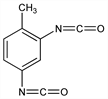
2,4-Diisocyanato-1-methylbenzene; 2,4-diisocyanatotoluene; 2,4-tolylene diisocyanate; TDI; Nacconate 100 (Allied).
C
9H
6N
2O
2; mol wt 174.16.
C 62.07%, H 3.47%, N 16.08%, O 18.37%.
Description and references
Usually prepd from toluene-2,4-diamine and
phosgene. Review: Astle, Industrial
Organic Nitrogen Compounds (New York, 1961) pp 284-313; Faith, Keyes & Clark's Industrial Chemicals, F. A. Lowenheim, M. K. Moran, Eds. (Wiley-Interscience, New York,
4th ed., 1975) pp 831-835.
Properties
Liquid at room temperature. Sharp, pungent odor.
mp 19.5-21.5°. d420 liq 1.2244. bp760 251°; bp11 126°. Darkens on exposure to sunlight. Reacts with water with
evolution of carbon dioxide. Flash pt, open cup: 132°C (270°F). Misc with
alcohol (decompn), diglycol monomethyl ether, ether, acetone, carbon
tetrachloride, benzene, chlorobenzene, kerosene, olive oil. Concd
alkaline compds such as NaOH or tert-amines may cause run-away
polymerization.Caution
Potential symptoms of overexposure
are irritation of eyes, skin, nose and throat; choking, paroxysmal
cough; chest pain, retrosternal soreness; nausea, vomiting and abdominal
pain; bronchitis, bronchospasm, pulmonary edema; dyspnea, asthma;
conjunctivitis, lacrimation; dermatitis, skin sensitization. See NIOSH Pocket Guide to Chemical
Hazards (DHHS/NIOSH 97-140, 1997) p 312. See also Clinical Toxicology of Commercial Products, R. E. Gosselin et al., Eds. (Williams & Wilkins,
Baltimore, 5th ed., 1984) Section II, p 414. This substance is reasonably
anticipated to be a human carcinogen: Report
on Carcinogens, Eleventh Edition (PB2005-104914, 2004)
p III-256.Use
In the manuf of polyurethane foams and other elastomers.