|
|
|
|
|
|
|
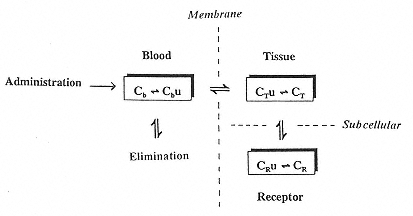
Fig. 7
Tissue uptake distribution and receptor binding of drug, where C is drug
concentration, u is unbound, b is blood, T is tissue, and R is receptor. |
|
|
|
|
|
|
|
|
drug exposure to activity and then, using this measure, extrapolate the results to humans [62]. Certainly in toxicology there are many routine biochemical, histopathological, and behavioural tests that are undertaken that could be related in some meaningful way to the exposure and this would serve as a reference for human studies. This is undertaken more routinely for anticancer agents that have important effects on white blood cell counts, and receptor based |
|
|
|
|
| Table 4 Some Assumptions for Plasma Kinetic Dynamic Relationships | | Plasma kinetics | |  |
|
|
|
|
Plasma levels proportional to that at receptor |
|
|
|
| |
|
|
|
|
Effect is simply related to plasma concentrations |
|
|
|
| |
|
|
|
|
Receptor binding is reversible and is linear with dose and time |
|
|
|
| |
|
|
|
|
Measured effect or surrogate end point reflects clinical disease |
|
|
|
| | Distribution is uniform and passive | |
|
|
|
|
No complex multiple receptor system or feedback control |
|
|
|
| |
|
|
|
|
Uptake is not affected by drug's activity |
|
|
|
| Little variability in subjects | | No metabolism in tissue | |
|
|
|
|
Single dose reflects long term repeat administration |
|
|
|
| |
|
|
|
|
No interspecies differences in distribution |
|
|
|
| |
|
|
|
|
No interspecies differences in sensitivity |
|
|
|
|
|
|
|