|
|
|
|
|
|
|
but is poorly understood. For many drugs, this down regulation of the system can lead to important reductions in activity and can show marked subject variation depending on the severity of the disease. This effect can be modeled using a more complete systems approach. One such recent example has been the analysis of the effect of nicardipine on blood pressure incorporating total peripheral resistance, baroreceptors, cardiac output, and heart rate [74] (Figures 8a and 8b). Using this approach it was possible to show how individual compensatory mechanisms come into play to regulate blood pressure and to model the drugs action when administered rapidly after an intravenous injection or more slowly after an infusion. |
|
|
|
|
|
|
|
|
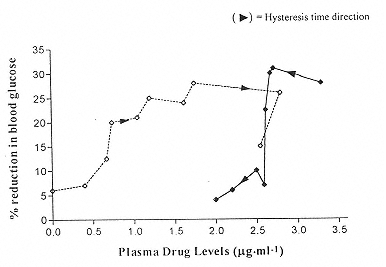
Increasingly, it is becoming apparent that the rate of delivery of a drug can affect the ultimate action and that for both the calcium antagonists [75] and sulphonylureas [76] (Figure 9), rapid injection paradoxically produces shifts to the right of the Emax drug-level response curves suggesting rapid down regulation of the system to compensate for the immediate and excessive challenge. Only when these kinetic dynamic models are studied using the systems-based models of total control will we hope to understand the processes involved and the action of drugs. |
|
|
|
|
|
|
|
|
Fig. 9
Mean effect of gliclazide on the reduction of blood glucose levels over
a 4-hour period after ( ) intravenous and ( ) intravenous and (  ) infusion (3 hr) ) infusion (3 hr)
administration (65 mg) in humans (n = 3). |
|
|
|
|
|