|
|
|
|
|
|
|
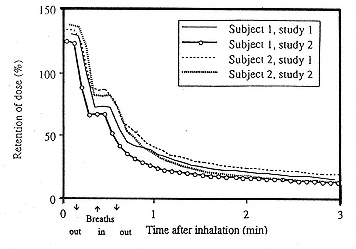
Fig. 11
Total body elimination of 18F-Tetrafluoroethane after a single
inhalation. (From Ref. 100.) |
|
|
|
|
|
|
|
|
Although, for example, in the brain many subcortical regions show gross structurally and histologically similar features to those found in humans, there is a growing awareness that there may be important differences in neurotransmitter binding and types of receptors between animals. For example, both citalopram and imipramine show marked species differences in their binding in the amygdala and hypothalamus [101]. Similar species differences in receptor binding and distribution have been shown for b receptor binding in the brain [102] and cholecystokinin (CCK) binding in rats and primates [103]. The 5-HT1B receptor, although present in the rat, is absent in humans who have a 5-HT1D receptor that is only different by two amino acids, but this confers differences in specificity. Brown fat that acts as a thermoregulator in rodents is present in infants but virtually absent in adult humans. These are but a few of the species differences now known to occur in receptor and physiological mechanisms. |
|
|
|
|
|
|
|
|
Although there are still practical difficulties with the imaging methods, it is likely they will be used increasingly in drug development [104] to understand disease, validate animal models, and, importantly, improve kinetic-dynamic modeling by measuring both drug levels and activity directly at the receptor. |
|
|
|
|
|