|
|
|
|
|
|
|
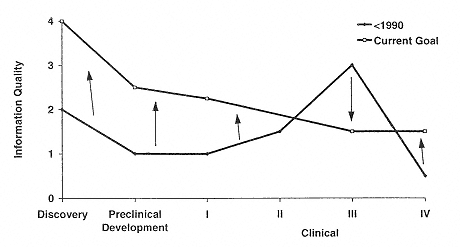
Fig. 1
Conceptual view of information quality over the research and development
phases. Values above 1 in information quality are increasingly smarter, 1 is
break-even, and below 1 is unsmart. |
|
|
|
|
|
|
|
|
to achieve balance between the work and other aspects of their lives. The contract between the company and the employee is in flux. |
|
|
|
|
|
|
|
|
From a clinical pharmacologist's perspective the challenges are that there are likely to be an ever-increasing number of drugs coming through the pipeline that are targeted to treat previously poorly treated or untreated diseases using new pharmacologic concepts. The resource to get the job done will not expand proportionately. This must be accomplished in an environment where change is more common than stability. However, a clear advantage to work in a changing environment is that experimentation with new concepts or technologies is easier to introduce. It is less common to defeat new ways of working in favor of tradition. |
|
|
|
|
|
|
|
|
To succeed in this environment, it will require understanding the R & D strategy, defining the clinical pharmacology core competencies, acquiring and developing new scientific skills, and creating a strategy for deploying, recycling, and supporting people in the drug development process. |
|
|
|
|
|
|
|
|
Core competencies are defined as the collective learning in the company, the coordination, the diverse R & D skills, and the integration of numerous tech- |
|
|
|
|
|