|
|
|
|
|
|
|
electronic validation will generate queries that require resolution before the data can be assumed clean. |
|
|
|
|
|
|
|
|
Fax/image-based approaches allow the preliminary visual review of the quality of the data to be shared between the study site and the monitoring site in an ongoing manner without the monitor visiting the site. Nonetheless, monitoring visits for source data verification, some resolutions of queries generated by electronic validation, and review of adherence to good clinical practice are still required. |
|
|
|
|
|
|
|
|
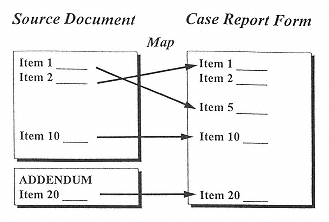
Finally, a growing number of clinical sites are implementing electronic patient record systems for all patients seen. For those patients who are also participating in a clinical trial, there is the opportunity to transfer electronically the source data to an electronic case report form (Figure 1). Data transferred this way will be precise and the need to compare the source to the case report form is eliminated. |
|
|
|
|
|
|
|
|
B. Capture and Transfer of Data Generated Outside the Clinic |
|
|
|
|
|
|
|
|
Safety lab data are required for almost all studies and data from speciality labs as well as daily diary data are required in many trials. Traditionally, safety lab data generated by a local lab and patient daily diary data were transcribed onto the case report form at the study site. Data generated from an automated analyzer by central laboratories and most speciality laboratories are routinely transferred electronically. |
|
|
|
|
|
|
|
|
Fig. 1
Electronic mapping of data from a clinic record (source
data) to a case report form (clinical trial data). |
|
|
|
|
|