|
|
|
|
|
|
|
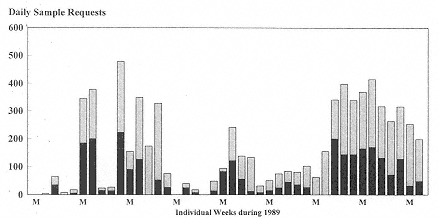
Fig.2
Typical daily workload pattern for clinical chemistry (hatched bars) and
hematology (solid bars) for a two month period in 1989. |
|
|
|
|
|
|
|
|
and specifically tailored to the pharmacology of the drug but the core safety profile is similar to that for preclinical toxicology studies; however, the laboratory is required to report the results from these trials within 5 hours of sample receipt. As illustrated in Figure 2, during the period 19801990 the daily workload for the laboratory was quite variable. It was not uncommon for the laboratory to be faced with periods of inactivity punctuated by periods of frantic exertion when several studies came to fruition simultaneously. During these periods of inactivity, staff occupied themselves with method development and evaluations; however, unless the laboratory has an active clinical pathology research program, such activities may not be cost effective. Clearly, most laboratory managers will wish to even out the workload. By the very nature of the timed sampling procedures for toxicology studies, the limitation of the number of compounds in predevelopment and availability of animals rooms, it is unlikely that a laboratory can significantly improve its efficiency by simply relying on the efficient management and appropriate staggering of toxicology studies. |
|
|
|
|
|
|
|
|
At Zeneca, the option of supplementing the toxicology workload with blood samples from the company's own clinical trials was considered. During the period 19801990 the majority of all Phase I trials were performed in-house using Zeneca volunteers; Phase II and III trials were performed in both Europe and North America. For the European trials, the clinical pathology was performed by local laboratories at the trial centers and the results were returned to headquarters for manual punching into the clinical database and |
|
|
|
|
|