|
|
|
| Year | | R&D as % of Sales Plus Exports |
| Year | | R&D as % of Sales Plus Exports |
| Year | | R&D as % of Sales Plus Exports |
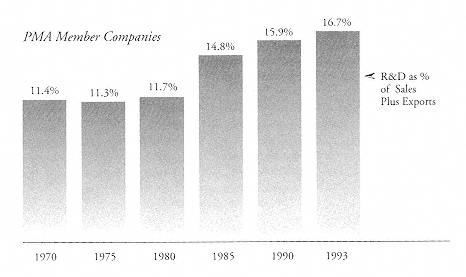
| | 1993 | 16.7% | 1985 | 14.8% | 1977 | 11.1% | | 1992 | 16.4 | 1984 | 14.3 | 1976 | 11.0 | | 1991 | 16.2 | 1983 | 14.4 | 1975 | 11.3 | | 1990 | 15.9 | 1982 | 13.8 | 1974 | 10.9 | | 1989 | 16.5 | 1981 | 13.1 | 1973 | 11.2 | | 1988 | 16.3 | 1980 | 11.7 | 1972 | 11.6 | | 1987 | 15.8 | 1979 | 11.2 | 1971 | 11.2 | | 1986 | 14.8 | 1978 | 10.9 | 1970 | 11.4 | | For 1994, R&D as % of Sales Plus Exports = 18.8%. |
| | Fig. 1 Research and Development as a percent of sales. R & D Basis: Intramural and extramural company-financed domestic U.S. R & D expenditures for human-use and veterinary-use pharmaceuticals. Sales Basis: domestic U.S. sales plus U.S. exports (includes exports to other firms as well as intrafirm exports). Source: PhRMA, 1994. |
|
|
|
|
|
|
are now between $500 and $1 billion per year per company and rising [52,53]. From a financial point of view, such an investment is only justified if it generates a return comparable to that which could be achieved by investing in other sectors of the economy. Over the past five years R & D expenditures have almost doubled, while the number of new drugs approved each year has remained relatively flat at approximately twenty-three [54]. Therefore, it costs more and more to bring a new drug to market and fewer and fewer failures |
|
|
|
|
|