|
|
|
|
|
|
|
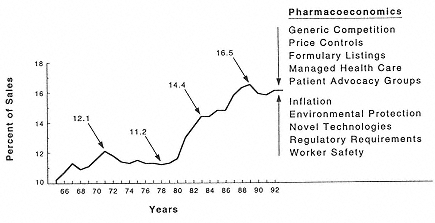
Fig. 1
Pharmaceutical R & D expenditures as a percent of sales. Some of the factors
that have driven R & D costs upward and sales downward are shown to the
right of the graph. (From Ref. [10].) |
|
|
|
|
|
|
|
|
the fraction of income that companies are willing to invest in research has plateaued at about 16% [10], and there are reasons to believe the fraction will not go higher. |
|
|
|
|
|
|
|
|
In the past, decisions about the choice of drug treatment were made by physicians, pharmacists, and opinion leaders who were primarily concerned about the properties of the drug, irrespective of cost. Now and in the future, other groups and factors are emerging that are forcing drug companies to adjust their marketing strategy [11]. These include the pressure of generic competition, the prospect of price controls and increased media coverage, the pressure from third party payment groups and managed health care organizations, and the influence of patient advocacy groups and consumer organizations. Since actions taken by companies to address these issues all tend to limit profitability, drug companies are re-examining expenditures. The successful companies of the future will find ways to produce high quality products more quickly and efficiently. |
|
|
|
|
|
|
|
|
II. Differences between Research and Development |
|
|
|
|
|
|
|
|
There are two quite different cultures that coexist within the R & D organization [12]. Some of the differences are listed in Table 1. Successful management of the R & D budget, as well as of R & D productivity, depends on under- |
|
|
|
|
|