|
|
|
|
|
|
|
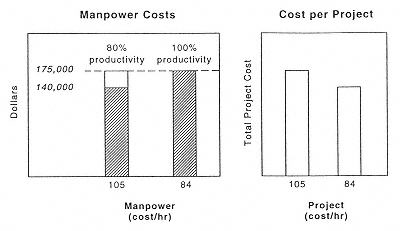
Fig. 2
Effect of productivity on project costs. The left panel shows that the
average cost of work for R & D employees working at 100% efficiency
is $84 per hour, versus $105 per hour when working at 80% efficiency.
The right panel shows that the cost of development is significantly
greater when the work costs $105 per hour. Increasing worker
productivity significantly reduces project costs without the need to
reduce the R & D budget. |
|
|
|
|
|
|
|
|
acknowledge the contribution quickly after the achievement are also more motivating than those that come after a long delay. In R & D, individual achievements should therefore be identified and rewarded as soon as possible after the contribution is made. For example, delivering a viable development candidate for preclinical testing is a significant achievement for a researcher, even if the drug never reaches clinical trials. Submitting a quality Investigational New Drug (IND) package is a significant achievement for a preclinical development team, even if the drug does not show clinical efficacy. From the point of view of motivation, the development process should be broken down into as many discrete contributory steps as possible, and management should be prepared to recognize and reward each of these contributions. Success is a great motivator for a scientist, but an achievement must be viewed by the recipient as a success. This can only happen if management recognizes and rewards it. |
|
|
|
|
|
|
|
|
Second, R & D operations have a high failure rate, and management may resist rewarding failure, for fear of sending the wrong message about company priorities. However, a clear distinction should be made between drugs that fail and people who fail. The accomplishments of those who tried their best to achieve success should be recognized even though the project fails. A team should be rewarded for showing clear evidence that a product candidate has |
|
|
|
|
|