|
|
|
|
|
|
|
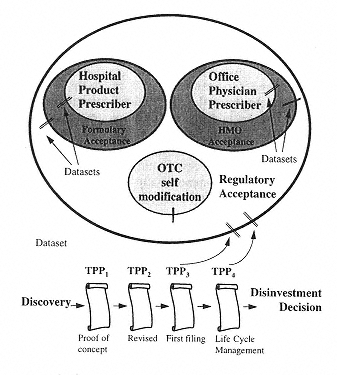
FIG. 3
TPP and data for decision makers. |
|
|
|
|
|
|
|
|
overall picture because unsatisfactory pharmacokinetics were responsible for nearly all terminations of anti-infectives but accounted for only 7 percent of other categories. If the anti-infective drugs are excluded (Fig. 3 lower panel), by far the major single reason was lack of adequate efficacy (46 percent). Would moving another member from the same series into development address this? This leads to a debate on chemical class, pharmacological class, and idiosyncratic non-class-related effects of drugs. In principle, it might (e.g., better access to the receptor sites, better binding kinetics may be evident within same series candidates). Moreover, toxicology findings, adverse events in humans, and pharmacokinetics together account for 40 percent of the reasons for project terminations. These may have nothing to do with intrinsic pharmacology and may be idiosyncratic. So, in principle, molecular hedging to overcome the reasons for technical failure makes sense. |
|
|
|
|
|