|
|
|
|
|
|
|
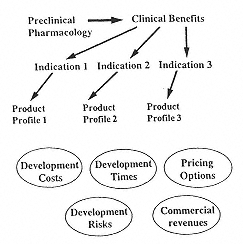
FIG.4
Indications filing strategy. |
|
|
|
|
|
|
|
|
with the product and that they, too, can see its value in use. If they cannot, then something is badly amiss. |
|
|
|
|
|
|
|
|
3.
Postfiling and Launch Strategy (Phase 3b/4) |
|
|
|
|
|
|
|
|
In a number of therapeutic areas, there is often a hierarchy of claims that, potentially, can be registered. In atherosclerosis, shorter term studies may document the effect of a novel lipid lowering agent on systemic lipid profiles, and drugs have been registered with claims based on such data. In longer studies, it may be possible to document that the drug can reduce the rate of progression of atherosclerosis or even better to demonstrate its reversal. Such studies could be done in peripheral vessels or perhaps even more persuasively in cardiac vessels. Still more convincing clinical benefit data could be provided if it can be demonstrated that the incidence of myocardial infarction or stroke is reduced in patients with abnormal lipid profiles. Regulators may wisely not attempt to extrapolate the clinical relevance of documenting different disease-related endpoints but, instead, may grant labeling, specifically, for what has been demonstrated appropriately in pivotal clinical studies. Drugs that are already marketed may have taken up the challenge to mount the hierarchy of claims staircase, creating a major hurdle for new entrants. Indeed, this is the case in a number of therapeutic areas (atherosclerosis, congestive heart failure). A strategic dilemma is to |
|
|
|
|
|