|
|
|
|
|
|
|
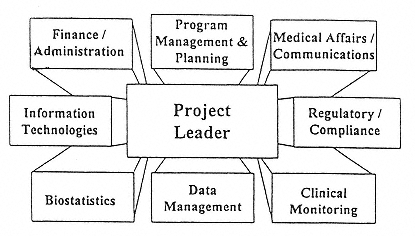
sponsor, a CRO may be requested to provide support in a single discipline, such as clinical monitoring or statistical analysis, or may be required to contribute a full range of disciplines as depicted in Fig. 1. |
|
|
|
|
|
|
|
|
To respond adequately and flexibly in addressing the highly variable needs of multiple sponsors in terms of project size, scope, and therapeutic discipline, most major CROs employ a matrix management system. This approach requires that team members are drawn from technical departments to serve the specific needs of a project under the leadership of a project manager. |
|
|
|
|
|
|
|
|
In this management structure, the team members report to the project manager on a dotted line basis while maintaining direct reporting responsibility to their respective technical departments. Ideally, this assures consistent, high-quality technical support from each discipline across multiple projects throughout the CRO, while demanding expert leadership and management from each project manager. The project manager is typically a member of a project management department which provides training, management guidance, tools and ancillary resources to each manager. |
|
|
|
|
|
|
|
|
Historically, pharmaceutical companies often expected medical doctors or other scientists to lead and manage projects. However, over time, the management component of that responsibility has gradually shifted to individuals of various backgrounds who have been specifically trained to lead and manage people and operational processes. In this way, physicians |
|
|
|
|
|