|
|
|
|
|
|
|
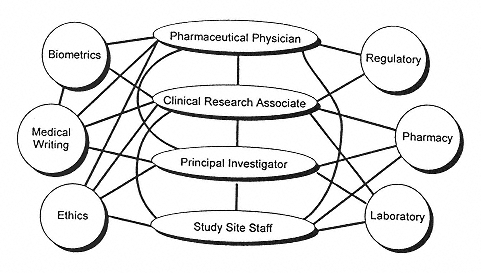
FIG. 1
Clinical research negotiations: Example of potential complexity. |
|
|
|
|
|
|
|
|
which have to be carried out during the planning process and later when the study or program of studies is under way. The figure also shows the potential complexity of these negotiations and the high probability of failure unless a clear structure is implemented. |
|
|
|
|
|
|
|
|
1.
The Multidisciplinary Team |
|
|
|
|
|
|
|
|
Some comment on the conventional team structure in clinical research is appropriate at this stage. Traditionally, the pharmaceutical physician has wielded most of the authority, but today this is all changing. A clear career structure is now available to nonmedical clinical scientists, so decision making will often be in the hands of experienced people whose qualifications do not necessarily include a medical degree. The main benefit of this trend is that a wider range of skills is available for managing clinical projects. Physicians are still necessary, but, now, they are members of multidisciplinary teams. In the traditional structure, both the pharmaceutical physician and the clinical research associate (CRA) have to negotiate with the study-site personnel, usually starting with the clinician who has overall authority for the site. Other study-site personnel may include research nurses, study-site coordinators, technicians, junior medical staff, and administrative staff (e.g., medical secretaries). Other disciplines within or connected to the site's |
|
|
|
|
|