|
|
|
|
|
|
|
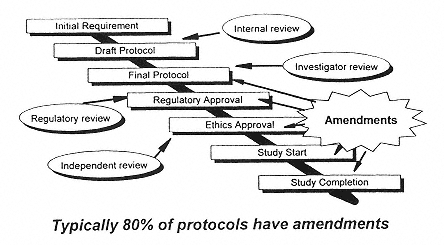
FIG. 2
Protocol construction and progress: Conventional process. |
|
|
|
|
|
|
|
|
ample, happens if the initial requirement is incomplete? Can we assume, safely, that the client has (a) thought of everything needed, and (b) has effectively communicated these needs in the requirement? Yet the conventional process makes just this assumption, with the result that gaps can remain unfilled or, perhaps, even worse, be filled erroneously by people further down the chain. |
|
|
|
|
|
|
|
|
A second common problem with protocols is lack of focus on functional objectives. For example, a clear objective would be To enable a decision on which patient population to target in the marketing campaign. A less clear objective would be To evaluate the safety and efficacy of . The first offers a clear benefit from a successful trial, the second does not. If the drug turns out to be safe and effective (and we need criteria here), what are we going to do with the knowledge? This exemplifies the need for clear thinking and structured communication, usually with a wide range of people directly or indirectly involved in the trial. The author has encountered studies which started off with laudably clear objectives, but were published with very vague ones, presumably reflecting the quality of the data collected! |
|
|
|
|
|
|
|
|
4.
Study Designs and Methods. |
|
|
|
|
|
|
|
|
A common pitfall is insufficiently rigorous evaluation of study designs and methods. A straw poll during a clinical project management training |
|
|
|
|
|