|
|
|
|
|
|
|
instance, unless the phase II specialists are involved in agreeing to and accepting the phase I results, at least two problems might occur. First, the phase I results might not meet the requirements to enter phase II, and secondly, the phase II specialists might not accept the results even if correct. This highlights the need for open and regular communication and involvement of people on a team basis. |
|
|
|
|
|
|
|
|
4.
Project Manager Functions. |
|
|
|
|
|
|
|
|
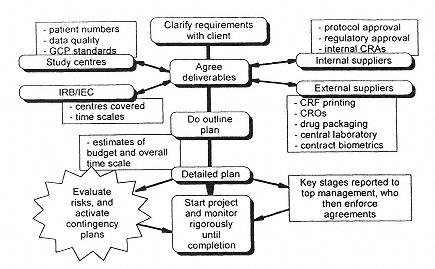
It may appear to the reader that the clinical project manager is almost a mythical beast, requiring amazing personal and professional attributes. Figure 6 shows the main functions to be fulfilled. Compare this with Fig. 1. What is different is that the complexity has been reduced by breaking it down into logical stages, each stage having clear channels of communication. Scientists are usually very good at managing such a structure, because of their analytical approach to planning (and problems). This is more a valuable by-product of being a scientist, than the main reason for the qualification, which is to know enough to assess that what one is being told is truevital at the planning stages. However, it is hardly practical to engage a technical specialist to manage every new project, and, indeed, it is not |
|
|
|
|
|
|
|
|
FIG. 6
Project Manager Functions. Courtesy of A. E. Berridge, Technical
Management Development Ltd. (adapted). |
|
|
|
|
|