|
|
|
|
|
|
|
with the existing project management system. Second, key quality steps are included in each clinical project plan, as shown in Fig. 8. Thus, the project management system ensures compliance with the quality and the GCP requirements of the study. In addition, with the study's critical path clearly highlighted, we are alerted to the tasks which must achieve quality approval first time, or they will delay the whole project. |
|
|
|
|
|
|
|
|
E.
Integrating GCP, Quality Systems, and Project Management |
|
|
|
|
|
|
|
|
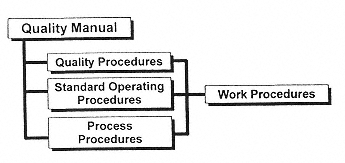
But as we have seen, one of the project manager's needs is to cope with new challenges from new project ideas. So it is not possible to standardize everything. Several pharmaceutical companies and CROs have approached this with procedures at several levels. Figure 9 shows one such approach. The more familiar SOPs contain completely standard material, with the project templates discussed above. At the working level, the varying requirements of individual studies can be accommodated with work procedures, which contain only material specific to that study, especially where a departure from standard practice is necessary. The baseline project plan for the study will be included as an appendix. |
|
|
|
|
|
|
|
|
In between, other documents may be needed. For example, if the organization has any areas of specialization, a procedure for that special process may be written. Finally, governing all operations and projects are the quality manual and quality procedures, the first of which states policy and the second sets out methods for ensuring that quality policy is met. |
|
|
|
|
|
|
|
|
One word of warning on quality systems: They are of no use unless they actually improve business performance. A recent survey [4] suggests that a |
|
|
|
|
|
|
|
|
FIG. 9
Procedures for quality: As implemented in a contract research
organization. |
|
|
|
|
|