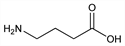
430. γ-Aminobutyric Acid
Nomenclature
Description and references
Ubiquitous nonprotein amino acid. Major inhibitory neurotransmitter in mammalian CNS; also has trophic role in neuronal development. Formed from glutamate by glutamic acid decarboxylase (GAD). Biological effects are mediated via 3 main types of GABA receptor complexes (A, B, C). The ionotropic GABAA receptor is the site of action of numerous pharmacological agents including benzodiazepines, barbiturates, anesthetics, and ethanol. Prepn from piperylurethan and fuming nitric acid: Schotten, Ber. 16, 643 (1883); from succinimide: Tafel, Stern, Ber. 33, 2224 (1900); from γ-chlorobutyronitrile and potassium phthalimide: Gabriel, Ber. 22, 3335 (1889); 23, 1771 (1890); C. C. DeWitt, Org. Synth. coll. vol. II, 25 (1943). Thermodynamic properties: E. J. King, J. Am. Chem. Soc. 76, 1006 (1954). Identification in brain: J. Awapara et al., J. Biol. Chem. 187, 35 (1950); and enzymatic formation from glutamic acid: E. Roberts, S. Frankel, ibid. 55. Physiological properties: H. McLennan, J. Physiol. 139, 79 (1957). Review of biochemical pharmacology: N. G. Bowery, T. G. Smart, Br. J. Pharmacol. 147, Suppl. 1, S109-S119 (2006); of biosynthesis, metabolism, and homeostasis: H. S. Waagepetersen et al., J. Neurochem. 73, 1335-1342 (1999). Review of role in neurological disease: C. G. T. Wong et al., Ann. Neurol. 54, Suppl. 6, S3-S12 (2003); as developmental signal: D. F. Owens, A. R. Kriegstein, Nat. Rev. Neurosci. 3, 715-727 (2002).