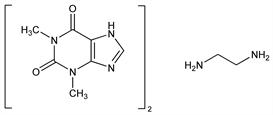
465. Aminophylline
Nomenclature
CAS number: 317-34-0
3,9-Dihydro-1,3-dimethyl-1H-purine-2,6-dione compd
with 1,2-ethanediamine (2:1); theophylline compd with ethylenediamine; theophylline ethylenediamine; theophyllamine; Afonilum (Knoll); Aminodur (Berlex); Cardophylin (Rhne-Poulenc); Euphyllina (Byk Gulden); Pecram (Novartis); Phyllocontin (Purdue Frederick); Phyllotemp (Mundipharma); Planphylline (Viatris); Pulmovet (Solvay); Tefamin (Recordati). C16H24N10O4; mol wt 420.43.
C 45.71%, H 5.75%, N 33.32%, O 15.22%.
Description and references
Prepn: Grüter, US 919161 (1909 to Byk). Toxicity data: C. R. Thompson, M. R. Warren, J. Lab. Clin. Med. 31, 1337 (1946). Comprehensive description: K. D. Thakker, L. T. Grady, Anal. Profiles Drug Subs. 11, 1-44 (1982). Reviews of clinical experience: J. A. Stirt, S. F. Sullivan, Anesth. Analg. 60, 587-602 (1981); A. G. Perry, AACN Clin. Issues 6, 297-306 (1995).
Properties
Occurs as the dihydrate. White or slightly yellowish granules or powder. Slight ammoniacal odor, bitter taste. Upon exposure to air, gradually loses ethylene diamine and absorbs carbon dioxide with liberation of theophylline. Insol in alcohol, ether. Keep tightly closed. LD50 orally in mice: 540 mg/kg (Thompson, Warren).Caution
Potential symptoms of overexposure include acute restlessness, anorexia, nausea, fever, vomiting, dehydration; followed by tremors, delirium, convulsions and coma; may result in cardiovascular and respiratory collapse, shock, cyanosis and death. See Clinical Toxicology of Commercial Products, R. E. Gosselin et al., Eds. (Williams & Wilkins, Baltimore, 5th ed., 1984) Section III, pp 17-21.Therapeutic Category
Bronchodilator.
Therapeutic Category (Veterinary)
Bronchodilator.Keywords
Bronchodilator; Xanthine Derivatives