Nomenclature
CAS number: 85-00-7
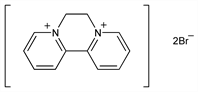
6,7-Dihydrodipyrido[1,2-
a:2′,1′-
c]pyrazinediium dibromide; 1,1′-ethylene-2,2′-dipyridylium dibromide; FB/2; Reglone (Syngenta).
C
12H
12Br
2N
2; mol wt 344.05.
C 41.89%, H 3.52%, Br 46.45%, N 8.14%.
Description and references
Prepn: Fielden et al., US 2823987 (1958 to ICI). Herbicidal properties: Brian et al., Nature 181, 446 (1958). Environmental
fate and toxicity: Simsiman et al., Residue Rev. 62, 131-174 (1976). Acute toxicity
study: T. B. Gaines, R. E. Linder, Fundam.
Appl. Toxicol. 7, 299 (1986). Review: Akhavein, Linscott, ibid. 23, 97-145 (1968).
Derivative
Monohydrate.
Nomenclature
CAS number: 6385-62-2
Properties
Pale yellow crystals from water, mp <320° (dec). Also reported
as mp 335-340°. uv max: 308.31 nm (ε 18000). Soly in water at 20°: 70%. Insoluble
in organic solvents. Slightly sol in alcohol. Stable in acid or
neutral soln. LD50 in male, female rats
(mg/kg): 147, 121 orally; in male rats (mg/kg): 433 dermally (Gaines, Linder).Caution
Potential symptoms of overexposure
are irritation of eyes, skin, mucous membranes, respiratory system;
rhinorrhea, epistaxis; skin burns; nausea, vomiting, diarrhea, malaise;
kidney and liver injury; cough, chest pain, dyspnea, pulmonary edema;
tremor, convulsions; delayed wound healing. See NIOSH Pocket Guide to Chemical Hazards (DHHS/NIOSH
97-140, 1997) p 122.Use
Contact herbicide used also to produce desiccation
and defoliation.