3432. Doxapram
Nomenclature
Description and references
Respiratory stimulant; acts on both peripheral carotid chemoreceptors and central brainstem respiratory sites. Prepn: C. D. Lunsford, A. D. Cale, BE 613734; eidem, US 3192206 (1962, 1965 both to A. H. Robins); C. D. Lunsford et al., J. Med. Chem. 7, 302 (1964). GC/MS determn in biological fluids: H. Nichol et al., J. Chromatogr. 182, 191 (1980). Pharmacokinetics in neonatal apnea: M. A. Beaudry et al., Dev. Pharmacol. Ther. 11, 65 (1988). Laboratory use in the induction of panic attacks: J. L. Abelson et al., Psychoneuroendocrinology 21, 375 (1996). Clinical evaluation in bradycardia, hypoxemia and apnea of prematurity: C. F. Poets et al., Biol. Neonate 76, 207 (1999). Review of clinical use and mechanism of action: C. S. Yost, CNS Drug Rev. 12, 236-249 (2006).
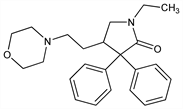
Derivative
Hydrochloride monohydrate.Nomenclature
Properties
Crystals from isopropyl ether, mp 217-219°. Bitter taste. Sol in water; sparingly sol in alc, slightly sol in chloroform. LD50 orally in rats: 261 mg/kg. See E. I. Goldenthal, Toxicol. Appl. Pharmacol. 18, 185 (1971)Use
In laboratory models to induce panic attack.Therapeutic Category
Respiratory stimulant.
Therapeutic Category (Veterinary)
Respiratory stimulant.Keywords
Respiratory Stimulant