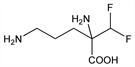
3522. Eflornithine
Nomenclature
Description and references
Irreversible inhibitor of ornithine decarboxylase, an enzyme involved in polyamine biosynthesis. Prepn: B. W. Metcalf et al., J. Am. Chem. Soc. 100, 2551 (1978); P. Bey et al., J. Org. Chem. 44, 2732 (1979). Effect on polyamine biosynthesis in trypanosomes: C. J. Bacchi et al., Science 210, 332 (1980). Clinical pharmacokinetics: K. D. Haegele et al., Clin. Pharmacol. Ther. 30, 210 (1981). Reviews of clinical experience in Pneumocystis carinii pneumonia: J. Sahai, A. J. Berry, Pharmacotherapy 9, 29-33 (1989); in cancer chemotherapy: F. L. Meyskens, Jr., E. W. Gerner, Clin. Cancer Res. 5, 945-951 (1999); in trypanosomiasis: C. Burri, R. Brun, Parasitol. Res. 90, S49-S52 (2003). Review of topical use in hirsutism: J. A. Barman Balfour, K. McClellen, Am. J. Clin. Dermatol. 2, 197-201 (2001).
Derivative
Hydrochloride monohydrate.Nomenclature
Properties
Crystals from ethanol/water, mp 183°. Freely sol in water; sparingly sol in ethanol.Therapeutic Category
Antineoplastic; antipneumocystic; antiprotozoal (Trypanosoma). In treatment of hirsutism.
Keywords
Antineoplastic; Antipneumocystic; Antiprotozoal (Trypanosoma)