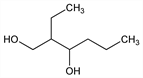
3744. Ethohexadiol
Nomenclature
CAS number: 94-96-2
2-Ethyl-1,3-hexanediol; 2-ethyl-3-propyl-1,3-propanediol; octylene glycol; 6-12 (Union Carbide). C8H18O2; mol wt 146.23.
C 65.71%, H 12.41%, O 21.88%.
Description and references
Prepn: Kulpinsky, Nord, J. Org. Chem. 8, 256 (1943); B. G. Wilkes, US 2407205 (1946 to Carbide & Carbon Chemicals). Activity: P. Granett, H. L. Haynes, J. Econ. Entomol. 38, 671 (1945); W. V. King, ibid. 44, 339 (1951); B. V. Travis, C. N. Smith, ibid. 428. As an additive in mosquito repellant: W. G. Reifenrath, L. C. Rutledge, J. Pharm. Sci. 72, 169 (1983). Toxicity study: B. Ballantyne et al., Vet. Hum. Toxicol. 27, 491 (1985).