Nomenclature
CAS number: 141-78-6
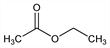
Acetic acid ethyl ester; acetoxyethane; ethyl ethanoate; acetic ether; vinegar naphtha.
C
4H
8O
2; mol wt 88.11.
C 54.53%, H 9.15%, O 36.32%.
Description and references
Obtained by the slow distillation of a mixture
of acetic acid, ethyl alc, and sulfuric acid: Alheritiere, Mercier, US 2787636 (1957 to Usines de
Melle); Faith, Keyes &
Clark's Industrial Chemicals, F. A. Lowenheim, M. K. Moran,
Eds. (Wiley-Interscience, New York, 4th ed., 1975) pp 350-354. Toxicity:
H. F. Smyth et al., Am. Ind. Hyg.
Assoc. J. 23, 95 (1962).
Properties
Clear, volatile, characteristic fruity odor; pleasant
taste when diluted. Slowly dec by moisture, then acquires an acid
reaction. Absorbs water (up to 3.3% w/w). d420 0.902; d2525 0.898. bp 77°. mp -83°. Ignition temp
800°F. Explosive limits (% vol in air): 2.2 to 11.5. nD20 1.3719. Vapor density 3.04 (air = 1). One ml dissolves in 10 ml
water at 25°; more sol at lower and less sol at higher temps. Misc
with alc, acetone, chloroform, ether. Azeotropic mixture with water
(6.1% w/w) bp 70.4°. Azeotropic mixture with water (7.8% w/w) and alc (9.0% w/w) bp 70.3°. Flammable. Keep tightly closed in a cool place. LD50 orally in rats: 11.3 ml/kg (Smyth).Caution
Potential symptoms of overexposure
are irritation of eyes, skin, nose and throat; narcosis; dermatitis.
See NIOSH Pocket Guide to Chemical
Hazards (DHHS/NIOSH 97-140, 1997) p 130.Use
Pharmaceutic aid (flavor); artificial fruit essences.
Extraction medium and chromatography reagent. Organic solvent for
nitrocellulose, varnishes, lacquers, and aeroplane dopes; manuf smokeless
powder, artificial leather, photographic films and plates, artificial
silk, perfumes; cleaning textiles, etc.