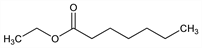
3835. Ethyl Oenanthate
Nomenclature
CAS number: 106-30-9
Heptanoic acid ethyl ester; ethyl heptanoate; ethyl n-heptoate; oenanthic ether; cognac oil, synthetic; oil of grapes; aether oenanthicus; oleum vitis viniferae. C9H18O2; mol wt 158.24.
C 68.31%, H 11.47%, O 20.22%.
Description and references
Obtained commercially either by esterification of heptanoic acid, yielding a high-grade product; or by the direct esterification of coconut oil yielding a mixture of the ethyl esters of lauric, myristic, palmitic, and other higher fatty acids plus ethyl and isoamyl alcohol. For some flavoring applications the latter product is more desirable. Prepn: Rogers, J. Am. Pharm. Assoc. Sci. Ed. 12, 503 (1923). Toxicity: P. M. Jenner et al., Food Cosmet. Toxicol. 2, 327 (1964).