Nomenclature
CAS number: 860-22-0
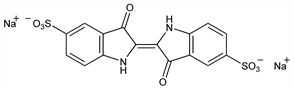
2-(1,3-Dihydro-3-oxo-5-sulfo-2
H-indol-2-ylidene)-2,3-dihydro-3-oxo-1
H-indole-5-sulfonic acid sodium salt (1:2); 3,3′-dioxo-[Δ
2,2′-biindoline]-5,5′-disulfonic acid
disodium salt; disodium 5,5′-indigotin disulfonate; sodium indigotin disulfonate; soluble indigo blue; indigotine; Acid Blue 74; C.I. Acid Blue 74; C.I. Food Blue 1; FD & C Blue No. 2; C.I. 73015.
C
16H
8N
2Na
2O
8S
2; mol wt 466.35.
C 41.21%, H 1.73%, N 6.01%, Na 9.86%, O 27.45%, S 13.75%.
Description and references
Synthesis and structure determination: Vorlander,
Schubart, Ber. 34,
1860 (1901). Prepn and properties: Matthews, Color Trade J. 6, 96 (1920). See also Colour Index vol. 4 (3rd ed., 1971) p 4597.
Properties
Dark-blue powder with coppery luster. Sensitive
to light. Its solns have a blue or bluish-purple color. Changes
color from blue to yellow between pH 11.5-14. One gram dissolves
in about 100 ml water at 25°. Slightly sol in alcohol. Practically
insol in most other organic solvents. It is also marketed as a paste
with water, the dye contents varying according to specification or
requirements of the user. It almost always contains sodium chloride
or sulfate used for “salting” it out. Indigo carmine is very sensitive
to oxidizing agents. The color is readily discharged by nitric acid,
chlorates, etc. The color of the aq soln fades on standing.Use
Colorant for nylon, surgical sutures, foods and
ingested drugs. Histological stain used for collagen, plant cell
nuclei, and fluorescent staining of eosinophil granules. In vivo
stain for endoscopic diagnosis; detection of sentinel lymph nodes;
angiographic tracer. As a reagent for functional kidney tests, for
detection of nitrates, chlorates and in testing milk.