|
|
|
|
|
|
|
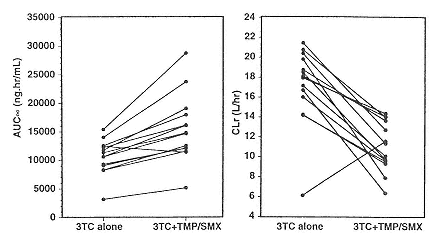
Fig. 6
Individual plots of the lamivudine (3TC) area under the serum
concentration time curve (AUC) and renal clearance (CLr) with and
without coadministration of trimethoprim (TMP)/sulfamethoxazole (SMX). |
|
|
|
|
|
|
|
|
VI. Current and Future Needs |
|
|
|
|
|
|
|
|
To improve clinical pharmacology effectiveness in helping select new drugs for unmet therapeutic needs and better advising on how to use them, improvements need to occur in better use of the skills and technologies available now (management/organization), developing new scientific techniques, and developing people for a career in clinical pharmacology. |
|
|
|
|
|
|
|
|
VII. Management/Organization |
|
|
|
|
|
|
|
|
The value in a well-managed and organized company should be that it facilitates and unlocks the ability of people to work toward the company's mission. Developing better drugs more efficiently and making more money for investors probably meets the mission statement for many pharmaceutical companies. Yet the statistics on performance indicate in aggregate the pharmaceutical industry has room to improve. One index that should be relevant for clinical pharmacology is that by 1993 only 17.2% of new chemical entities with an IND filed from 1964 to 1989 had been approved for marketing in the United States [15]. The reasons given for stopping further clinical testing that emerged following the IND filing were lack of safety (27%) within 2 years, lack of efficacy (46%) in 2 years, and commercial or poor market forecast (23%) in 4 years. While the study did not specify reasons for failing efficacy, poor pharmaco- |
|
|
|
|
|