|
|
|
|
|
|
|
Changes in pharmacokinetic and dynamic science will likely be driven by changes in technology. Measuring drugs in ever lower concentrations, imaging labeled drugs in body regions in real time, and the ability to continuously collect blood or tissue concentrations from probes will change the way pharmacokinetic information is analyzed and reported. |
|
|
|
|
|
|
|
|
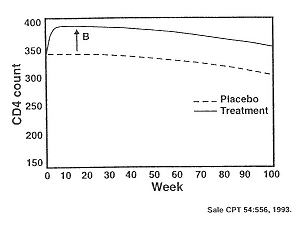
Biochemical, cellular, and clinical measures of drug effect need to be planned during the discovery phase for new therapeutic target areas. Clinical pharmacology needs to have access to preclinical scientists to establish these measurement techniques. Research is just now beginning to understand the disease surrogate versus time surface in the presence of no treatment or the existing therapy. The CD4 and viral burden versus time data collected in HIV infected patients with and without antiviral drugs serve as a model for understanding drug effect over the time cycle for the disease (Figure 10) [19]. Approval to market drugs in the future is likely to be more influenced by this type of information for both acute and chronic diseases. As with chemical drug assay validation criteria, there is a need to develop a better understanding of the criteria used to validate pharmacodynamic surrogates. |
|
|
|
|
|
|
|
|
Developing oneself is a commitment each person must make. The environment created must foster career development, scientific and otherwise. Departments |
|
|
|
|
|
|
|
|
Fig. 10
Estimated time course for CD4 cell
count for the average HIV patient in weeks
from study entry. Upper curve is for active
treatment with AZT and the lower curve
is for placebo treatment. (Source: Ref. 19.) |
|
|
|
|
|