|
|
|
|
|
|
|
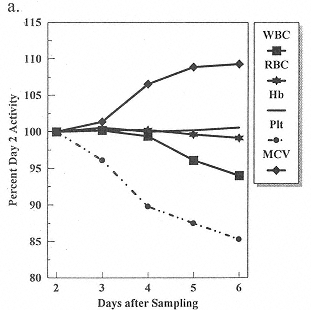
Fig. 6
Forty-seven human samples were analysed on day 2 (i.e.,
the day after being taken) and re-analysed daily for a further
4 days. (a, above) The percentage change from the day-2
values for 5 key hematology parameters. (b, opposite) The
mean absolute white blood cell count and the counts for
neutrophils (Neuts), lymphocytes (Lymphs), monocytes
(Monos), eosinophils (Eos), and basophils (Baso) are
displayed for the 5 days the samples were analysed. The
number of valid results on each day are given in the inset
box. |
|
|
|
|
|
|
|
|
being responsible for all IT activities and a further two providing appropriate Quality Control and Quality Assurance support. Although the laboratory's manpower has been increased by 35%, the number of samples received by the laboratory has doubled over the same period and the laboratory's analytical productivity has increased from 2.32 (in 1990) to 6.5 × 1,000 samples analyzed/person in 1994 (see Figure 5). |
|
|
|
|
|
|
|
|
B. Sample Stability for Clinical Chemistry and Hematology Analyses |
|
|
|
|
|
|
|
|
With the exception of our Phase I samples, all other clinical trial samples are transported overnight to the laboratory. The vast majority of our samples are transported at ambient temperature and transport with dry ice is only considered necessary where poor sample or test stability dictates, e.g., evaluation of coagulation times. Provided the plasma or serum samples are separated from |
|
|
|
|
|