|
|
|
|
|
|
|
the blood cell at the trial center, all routine clinical chemistry tests are stable for at least 5 days and the serum shows no clinically significant reduction in enzyme activities or analyte concentration up to this time. |
|
|
|
|
|
|
|
|
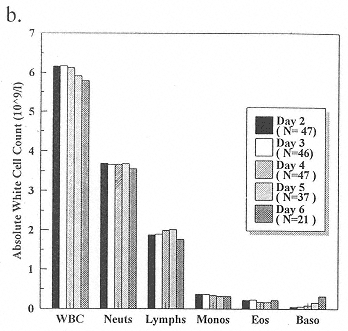
Traditionally there has always been concern about the stability of hematology samples and the reliability of assessing samples following their transport to a central laboratory. The assessment of white cell differentials is the least reliable in older samples and many trial protocols require the investigator to prepare blood films that are sent with the blood sample to the laboratory for manual assessment using a microscope. At Zeneca, the purchase of the Technicon H*1, and later the H*3, have dispensed with the need to prepare blood films. The Technicon H* series of analyzers use flow cytometry in combination with a biochemical marker to identify white blood cells. As part of the laboratory's evaluation and commissioning of the H*3, 47 trial samples that had been collected the previous day from clinical trial patients were evaluated and a full blood count and differential count determined. These samples were left on a labora- tory bench under a polystyrene igloo and were reanalyzed daily over a further 4 days. The hematology results of greatest clinical interest are presented in Figures 6a and 6b. With the Technicon H*3 the hemoglobin, red cell and white cell counts change by less than 5% over 4 days. A 10% increase in |
|
|
|
|
|