|
|
|
|
|
|
|
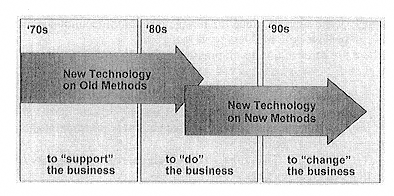
FIG. 3
The effect of IT on business operations. |
|
|
|
|
|
|
|
|
Throughout the 1970s, IT, or data processing as it was called, was used primarily to automate business support functions, such as accounting. The 1980s saw the applications emerge to automate business functions themselves, for example, sales. IT remained focused on automating clerical, systematic processes that were routine and repeatable. Personnel employed within these areas have now embraced IT as a necessary part of their daily operations. Because of the nature of work involved in bringing a drug to market, IT did not have a major impact on the drug development processes at that time. |
|
|
|
|
|
|
|
|
In the early 1990s, IT applications emerged which, for the first time, have had an impact on the knowledge worker. The term knowledge worker refers to a person who applies specialized business knowledge to business tasks, i.e., most of the people in the drug development process. These applications have primarily taken the form described in the previous section: personal productivity tools (including the project planning tools, word processors and spreadsheets used by the project manager) and communication capabilities. |
|
|
|
|
|
|
|
|
At times, implementing these new applications has been a painful process because user requirements and expectations were mishandled. To a large extent, this has laid the groundwork for the future because knowledge workers are beginning to view IT as an intrinsic part of their daily lives (and not merely part of someone else's). The increasing spread of technology into people's homes has also played a positive role in promoting extensive daily use of IT at work. However, there are still big steps to be taken to gain full |
|
|
|
|
|