|
|
|
|
|
|
|
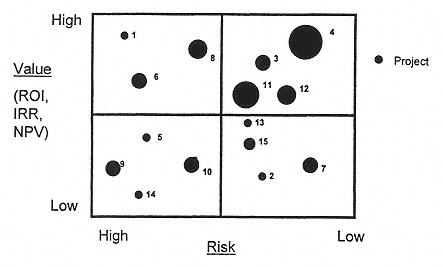
higher risk projects. It is still not clear from this presentation how the projects can be prioritized in the light of the company's attitude to risk. A further enhancement enables this assessment, as shown in Fig. 10. |
|
|
|
|
|
|
|
|
The shape of the lines, called isoquants, is determined by the weighting given to the risk components of the review relative to the value components. They allow segmentation of the portfolio into value groups based on the company's own attitude to risk. Vertical lines indicate that, with this analysis, a company is concerned to divide the portfolio only in terms of risk with complete indifference to value. Equally, horizontal lines indicate total indifference to risk and show concern solely with value. In Fig. 10, the shape of the isoquant represents a risk-neutral company that makes decisions on expected value. This could be the complete corporate view on risk or it could indicate, if skewed, that the value data are less robust than the risk data; this might well be the case for the portfolio of early stage projects where reliable market estimates are notoriously difficult to obtain. At later development stages, the shape may be different reflecting an appropriately higher degree of confidence in the commercial forecasts. The important change from Figs. 8 and 9 is that a different group of projects is captured at potentially higher priority reflecting a cut decided by corporate policy rather than the vagaries of a drawing tool. |
|
|
|
|
|
|
|
|
 |
|
|
|
|
|
|
|
|
FIG. 9
A display plot as in Fig. 8 enhanced to indicate forecast resource utilization. |
|
|
|
|
|