|
|
|
|
|
|
|
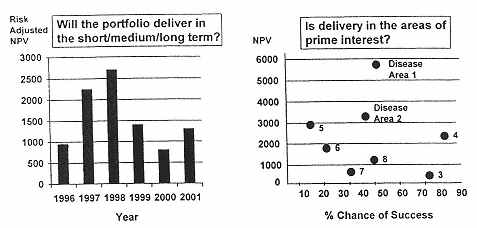
nor of the areas where it will be delivered. Will the portfolio deliver in the short, medium and long term and is the delivery in areas of longer term strategic interest to the company? There are numerous possible questions along these lines. Figure 14 suggests how information to help decisions on these two questions may be presented. |
|
|
|
|
|
|
|
|
Last in this section, consideration should be given to optimizing the portfolio. There are several tools and approaches available to help this and there are many different optimizations possible. To take one example, through the use of a productivity graph, an efficient prioritization may be made, as shown in Fig. 15, which uses the data from the table in section VII.A. |
|
|
|
|
|
|
|
|
Projects are ordered by a measure of productivity or return on investment using feasibility adjusted revenues and costs. By graphing the cumulative costs and sales, diminishing returns can be observed. In this way, the effect of constrained resources on sales is determined. Although the projects furthest to the right have the lowest priority using this measure, they may also have other qualities that make them attractive. In reality, some projects with low returns will continue to be pursued because of outstanding medical need, regulatory imperatives or other demands which override pure financial concerns. They may also, as in this example, be attractive for their net |
|
|
|
|
|
|
|
|
FIG. 14
A graphic presentation to illustrate results versus time (left panel) and
strategic interest (right panel). |
|
|
|
|
|