3103. Dieldrin

Nomenclature

CAS number: 60-57-1
(1aα,2β,2aα,3β,6β,6aα,7β,7aα)-3,4,5,6,9,9-Hexachloro-1a,2,2a,3,6,6a,7,7a-octahydro-2,7:3,6-dimethanonaphth[2,3-b]oxirene; 1,2,3,4,10,10-hexachloro-6,7-epoxy-1,4,4a,5,6,7,8,8a-octahydro-endo,exo-1,4:5,8-dimethanonaphthalene; insecticide no. 497; HEOD; ENT-16225; compd 497; Octalox (Velsicol).
C12H8Cl6O; mol wt 380.91.
C 37.84%, H 2.12%, Cl 55.84%, O 4.20%.

Description and references

Stereoisomer of endrin, q.v. Activity: C. W. Kearns et al., J. Econ. Entomol. 42, 127 (1949). Prepn from aldrin, q.v.: Soloway, US 2676131 (1954 to Shell); Payne, Smith, US 2776301 (1957 to Shell). Synthesis: Korte, Rechmeier, Ann. 656, 131 (1962). Metabolism: M. K. Baldwin et al., Chem. Ind. (London) 1970, 595; C. T. Bedford, D. H. Hutson, ibid. 1976, 440. Toxicity data: Gaines, Toxicol. Appl. Pharmacol. 14, 515 (1969). Review of toxicology and human exposure: Toxicological Profile for Aldrin/Dieldrin (PB2003-100134, 2002) 354 pp.
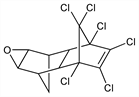
Chemical structure

Properties

Crystals, mp 176-177°. Vapor press at 20°: 3.1 × 10⁻⁶ mm Hg. Practically insol in water. Moderately sol in common organic solvents except aliphatic petr solvents and methyl alcohol. Stable in org and inorg alkalies and acids commonly used in agriculture. Affected by strong mineral acids. LD50 orally in rats: 46 mg/kg (Gaines).

Caution

Absorbed through skin, respiratory mucosa and GI tract. Potential symptoms of overexposure are malaise, headache, nausea, vomiting, dizziness, sweating, tremors, myoclonic limb jerks; clonic and tonic convulsions, coma, respiratory failure; leukocytosis, increased blood pressure, tachycardia, arrhythmia, metabolic acidosis, fever. Potential occupational carcinogen. See NIOSH Pocket Guide to Chemical Hazards (DHHS/NIOSH 97-140, 1997) p 104; Clinical Toxicology of Commercial Products, R. E. Gosselin et al., Eds. (Williams & Wilkins, Baltimore, 5th ed., 1984) Section III, pp 143-146.

Use

Formerly as insecticide.