5700. Malathion
Nomenclature
Description and references
Organophosphate insecticide; cholinesterase inhibitor. Prepn: Johnson et al., J. Econ. Entomol. 45, 279 (1952); Cassaday, US 2578652 (1951 to Am. Cyanamid). Purification: Usui, US 2962521 (1960 to Sumitomo). GC-MS/MS determn in urine: M. C. Márquez et al., J. Chromatogr. A 939, 79 (2001) DOI PubMed. Clinical trial for head lice infestation: T. L. Meinking et al., Pediatr. Dermatol. 24, 405 (2007) DOI PubMed. Toxicity data: T. B. Gaines, Toxicol. Appl. Pharmacol. 14, 515 (1969) DOI PubMed. Review of distribution, transport and fate in the environment: M. S. Mulla et al., Residue Rev. 81, 1-159 (1981) PubMed; of carcinogenic risk: IARC Monographs 30, 103-129 (1983); of toxicology and human exposure: Toxicological Profile for Malathion (PB2004-100003, 2003) 327 pp.
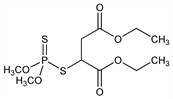
Properties
Deep brown to yellow liq, mp 2.9°. bp0.7 156-157°. Characteristic odor. d425 1.23. nD25 1.4985. Vapor pressure at 30°: 4 × 10⁻⁵ mm Hg. Slightly sol in water (145 ppm). Misc with many organic solvents including alcohols, esters, ketones, ethers, aromatic and alkylated aromatic hydrocarbons and vegetable oils. Limited soly in certain paraffin hydrocarbons. Petroleum ether is sol to about 35% in malathion. Hydrolyzed at pH >7.0 or <5.0. Stable in an aq soln buffered to pH 5.26. LD50 in female, male rats (mg/kg): 1000, 1375 orally (Gaines).Caution
Potential symptoms of overexposure are miosis, aching eyes, blurred vision and lacrimation; eye and skin irritation; salivation; anorexia, nausea, vomiting, abdominal cramps, diarrhea, giddiness, confusion and ataxia; rhinorrhea, headache; tightening of chest, wheezing and laryngeal spasms. See NIOSH Pocket Guide to Chemical Hazards (DHHS/NIOSH 97-140, 1997) p 188.Use
Insecticide.Therapeutic Category
Pediculicide.
Therapeutic Category (Veterinary)
Ectoparasiticide.Keywords
Ectoparasiticide