|
|
|
|
|
|
|
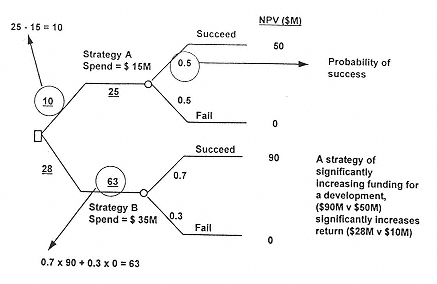
FIG. 5
A decision tree illustrating the effect of investment strategies on eventual
project value. |
|
|
|
|
|
|
|
|
computational burden. The methodology requires that, for each risk in the project, a probability or confidence distribution for the possible outcomes is programmed into a computer. The simulation then takes random values within this banding for each risk and multiplies them together to produce an overall value in the same way as described for decision trees. This analysis is carried out many times with different combinations of values, eventually yielding a distribution of values, as illustrated in Fig. 6. |
|
|
|
|
|
|
|
|
The advantage of this method is that it clarifies the spread of possible risks and values and shows the most likely outcome and the spread of possible outcomes. In addition to the computing burden, input data generation is much more onerous. It is a technique best reserved either for those companies with exceedingly well-developed risk management capability or specially sensitive situations. |
|
|
|
|
|
|
|
|
D.
Multiattribute Analysis |
|
|
|
|
|
|
|
|
This is a means to enable evaluation of several options using common criteria. For example, suppose we have two very similar development opportunities with different groups championing each opportunity. We need to |
|
|
|
|
|