|
|
|
|
|
|
|
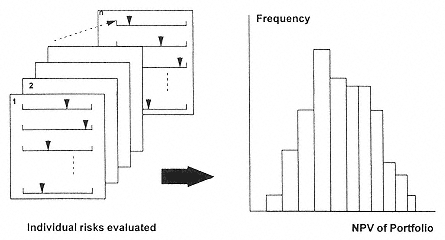
FIG. 6
A diagrammatic representation of a Monte Carlo simulation. |
|
|
|
|
|
|
|
|
find a way to build consensus on selection which may precede a more formal risk/reward appraisal or may complement it. The first step is to agree on the key features which the product must have and the key drawbacks which must be avoided. For simplicity, these might include the range of potential indications and launch date as key positives and likely side-effect profile and dosing convenience as negatives. Step two is to agree on the importance of these relative to each other. The third step is to evaluate each of the two options against each criterion to find the preferred option. This process is summarized in Fig. 7. |
|
|
|
|
|
|
|
|
This is a simple technique, the major strength of which is consensus building based on group preferences. |
|
|
|
|
|
|
|
|
E.
Option Pricing Analysis |
|
|
|
|
|
|
|
|
This technique has its roots in the financial world. Only relatively recently has its potential in pharmaceutical R&D been considered, though it is not yet widely accepted in that area. The concept is that the drug development process, in reality, is a series of investments based on emerging data. Thus, at each key decision point, the company may choose to continue or discontinue investment. It is not obliged to pay for the full development at the outset, which option pricing values. |
|
|
|
|
|